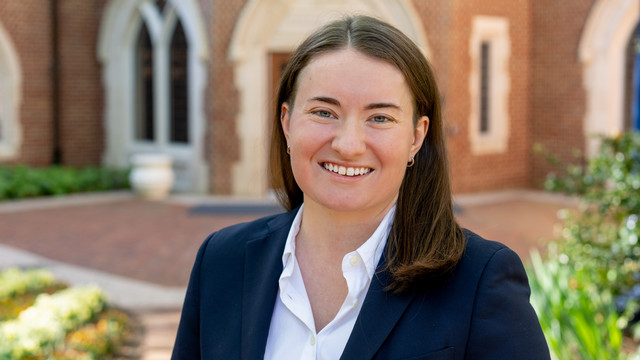
Life After Graduating from Richmond Law
For Alyssa G. Harrison, L’25, the Richmond Law web continues to stretch far beyond lessons learned in the classroom. As she begins her second year since graduation, she offers her perspective on remaining actively engaged as a new alumnus.
When did you know Richmond Law was the right law school for you?
My partner and I moved to Richmond just before orientation, and we were nervous for many reasons, but the biggest worry was whether I should be out during law school or even tell people about my partner. I remember the first friend I made during orientation was the first person who asked me what my partner’s name was!
My fears soon went away as I met more classmates and professors, who asked me about my life outside the law school, who my partner was, and got to know both of us. We became much more comfortable being able to be our full selves with our law school community, to the point that my partner spoke on the “Parents and Partners” panels for the Admitted Student Days. Richmond Law was the right school for me because I could be my authentic self there. I truly believe that being fully present for both my academics and community helped make me the person I am today.
And that very same orientation friend? Liza Garrity, L’25, ended up officiating my wedding right after Liza and I sat for our respective bar exams. She was the best person for the task, and I am so grateful that Richmond Law brought us together.
Between volunteering as a student ambassador, serving as OUTlaw’s president, and shaping the Law Review as its Symposium Editor, your ability to facilitate community was a hallmark during your time as a student. How have you continued to engage with the ever-expanding Richmond Law web as an alum?
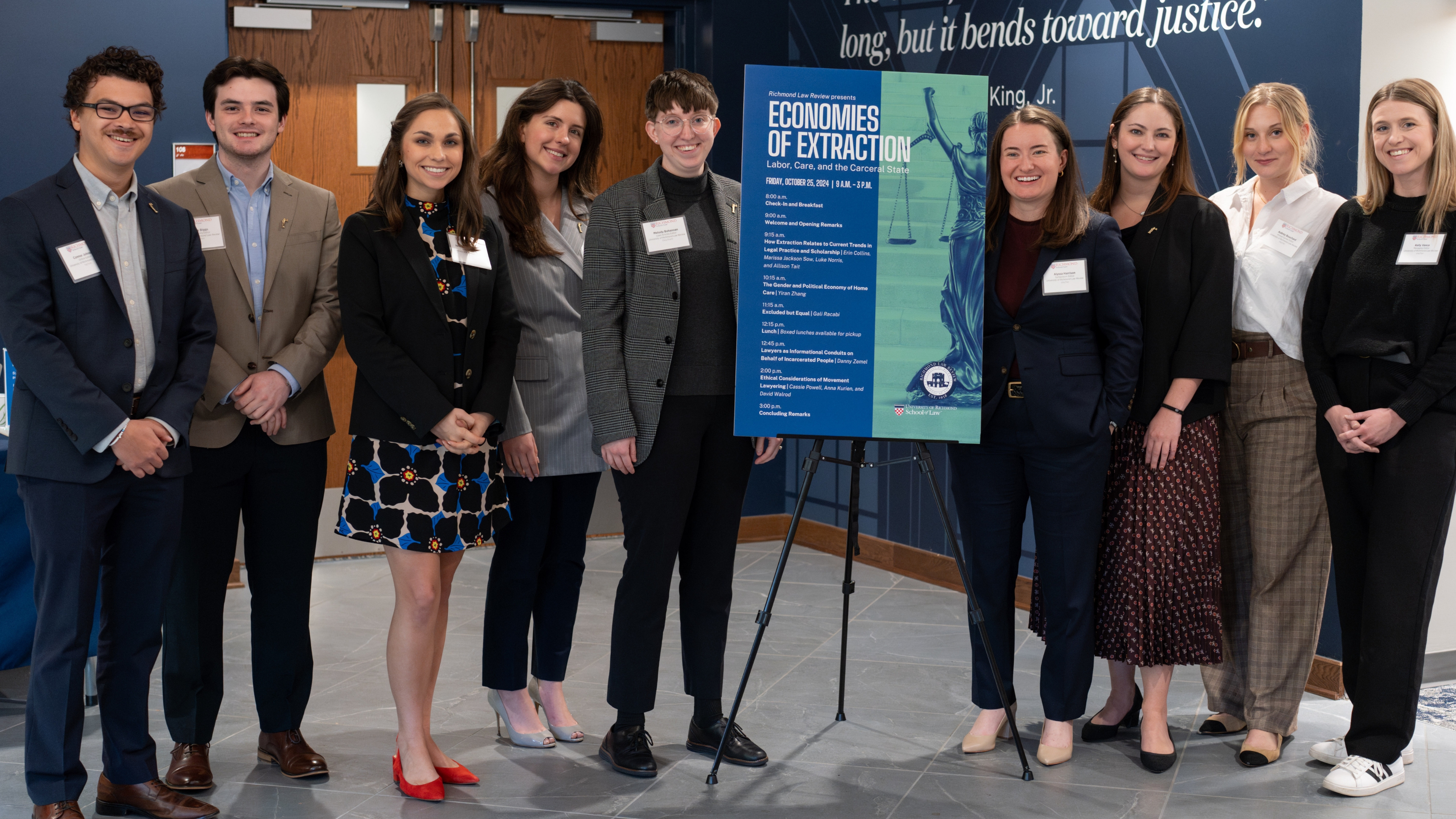
For me, staying engaged with Richmond Law after graduation isn’t just catching up over coffee; it’s showing up if a friend is running a pro bono clinic or using your own rolodex to see if you can make a referral. When a problem comes up, being the person to show up for your friends and colleagues, even when it’s hard, maintains the relationships that matter in your career. It was important for me to do that during law school, because it sets the standard for how you act in your future legal career.
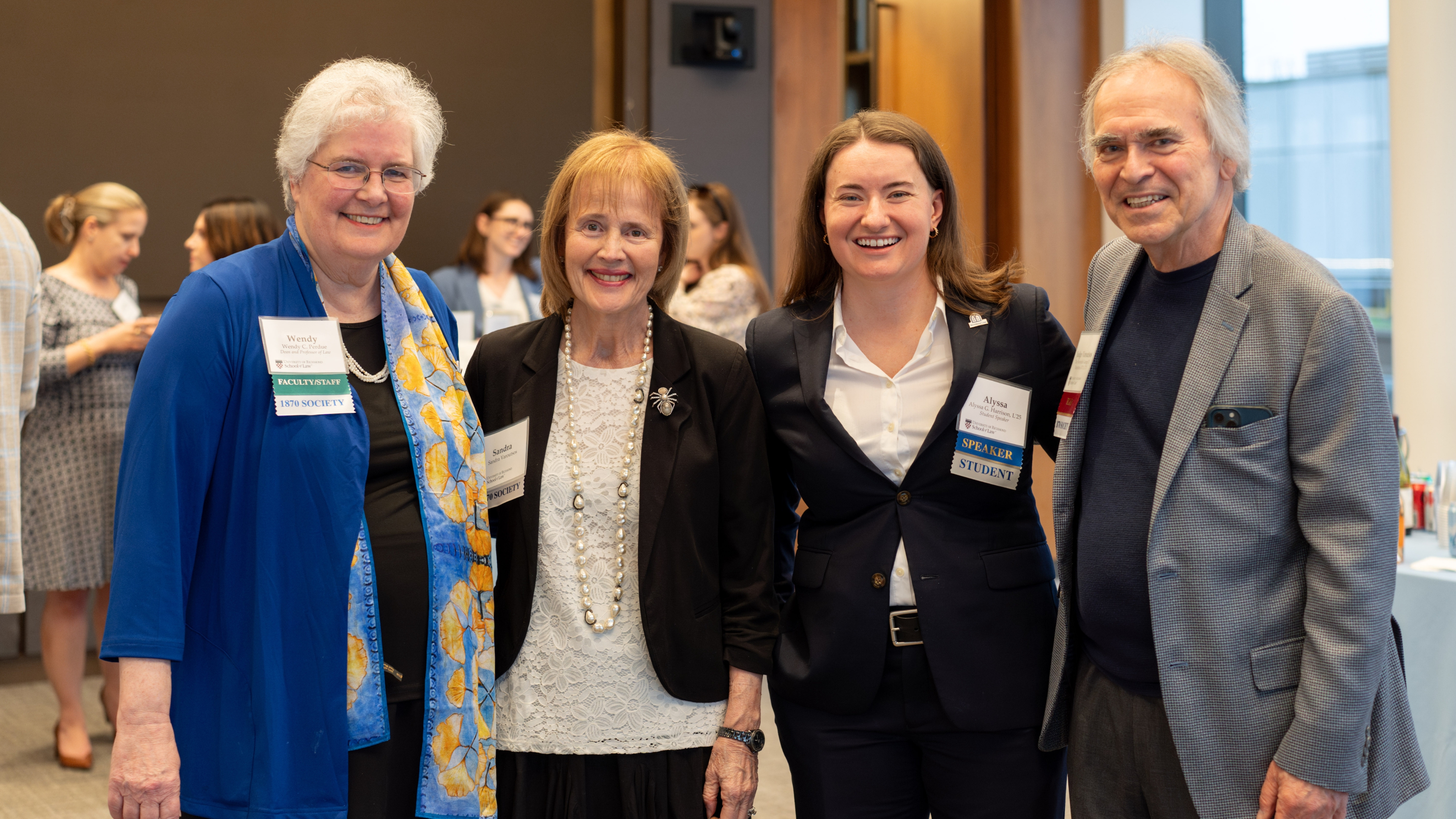
Another great way to stay engaged is seeing what your alumni network is doing in your immediate area! Attending 1870 Society events in Washington, D.C. is one such case, or coming down to Richmond to speak to classes during the semester is another. Seeing old and new friends alike is a great way to stay connected and find new opportunities for yourself or for someone else in your network.
What advice do you have for fellow new alumni looking to continue building upon the network they built while in law school?
Much of legal practice is being on a team, no matter if you’re interested in civil or criminal law or in public or private practice. When you’re on a team, it’s up to everyone to pitch in, and I think that’s where Richmond Law alumni shine the most. Being willing to say yes to the challenging assignment or the out-of-town-trip demonstrates that you want to contribute to the overall goal. A team player knows that everyone wants to help.
On the other hand, I think folks should be willing to ask for help too! We’re all figuring this out as we go, and we don’t have all the answers. Richmond Law alumni shine in connecting to one another and want to hear from current students, whether it’s to ask for career advice or where the best places to golf in an area are (which I’ve done, trust me).
You utilized our Summer Public Service Fellowship, working for the U.S. Attorney’s Office for the District of Columbia and then with the Department of Justice’s Civil Rights Division. How did that financial support influence your career goals and ultimately propel you to where you are today?
The SPSF gave me the freedom to try out the many different ways I could be a lawyer. I spent both summers in the D.C. area, which is where I was heading after law school as well. So being in D.C. with some of the brightest minds in public service demonstrated to me how intellectually challenging and rewarding that work can be. Those summers also showed me the value of clerking and how working side-by-side with a judge can really jumpstart your research and writing capabilities as a young attorney. I cannot imagine a better start to my career than clerking, and I would absolutely do it all over again.
Is there a classroom moment you often return to? What makes it memorable?
I worked for five years before heading to law school, and I always enjoyed being in a classroom, so I just wanted to learn as much as I could while I was at Richmond. When I took Evidence during my second year, Professor Erin Collins offered participation credit for reading excerpts from evidence-law-related law review articles and writing a short response paper with our thoughts. Reading those papers was the first time I felt my preconceived views about our legal system being challenged during law school. I really had to wrestle with some of them. But I felt myself grow—not just from managing the dense academic prose—because those articles made me reconsider what I thought about the law and the thorny questions that the legal profession asks of us. And whenever I wanted to know more, Professor Collins and her faculty colleagues always welcomed my questions with patience and kindness.
To me, the best teachers give students the space to pursue, or even reconsider, their own beliefs and priorities without pushing them one way or another. I was extremely fortunate to have had faculty mentors who cared about their students’ development as professionals and as people. I think I am a better legal professional and a better person because of attending Richmond Law.
What surprised you most during your first year out of law school? How did being a Richmond Law alum help?
I always love seeing my Richmond Law classmates or meeting new ones when I’m on the road. For example, I attended a reception hosted by a local bar association, and when I mentioned that I was a recent Richmond alumnus, I fielded so many questions such as how some professors were doing, what was new in Richmond, or what I enjoyed the most about law school. Having that shared language builds long-term connections, even when you least expect it.
It doesn’t hurt to see old friends either! When you don’t see the same folks in the Commons or in class daily, it’s all the more important to spend your time staying in touch with them when life begins after law school. I was very fortunate to work with Courtney Squires, L’24, on the Court of Appeals of Virginia in the first year of my clerkship. Since we knew each other during law school, our work relationship was even better because we had a similar knowledge base. Moreover, Courtney’s work ethic and care in our chambers set a wonderful example for me in the first year of my clerkship. I couldn’t have had a better colleague for my first position after graduation, and much of that was because of being with a fellow Richmond Law alum.